
Stake Chicken Canada
One fearless chicken, a midnight road, and multipliers that climb with every tap. Stake Chicken is a step-by-step crash game built for players who like fast rounds, transparent risk, and the freedom to cash out whenever their instincts say “that’s enough”.
This guide is written for Canadian players and includes practical tips around bankroll control in CAD, mobile play, and how the difficulty modes change volatility. No downloads required: Stake Chicken runs in modern browsers on phone, tablet, or desktop with the same core gameplay.
Quick Overview for Canadian Players
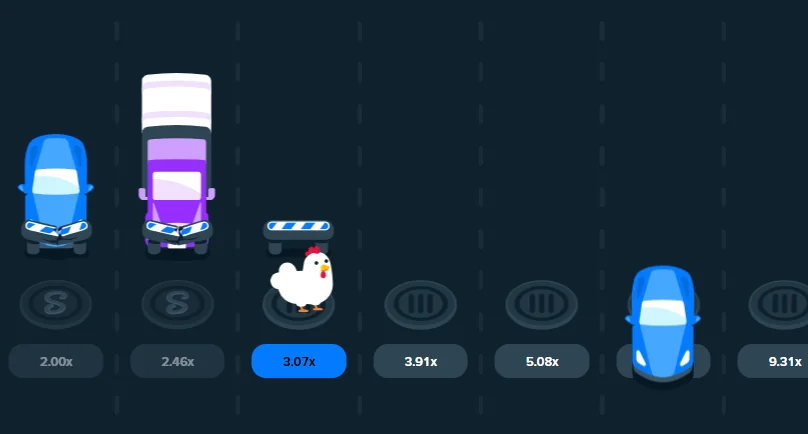
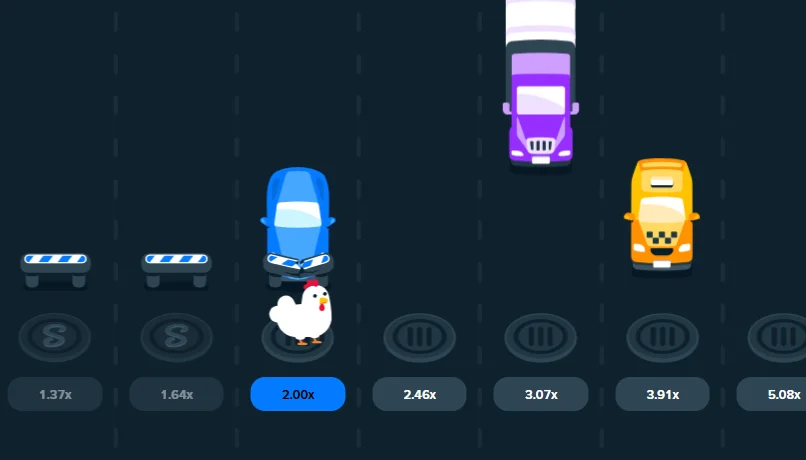
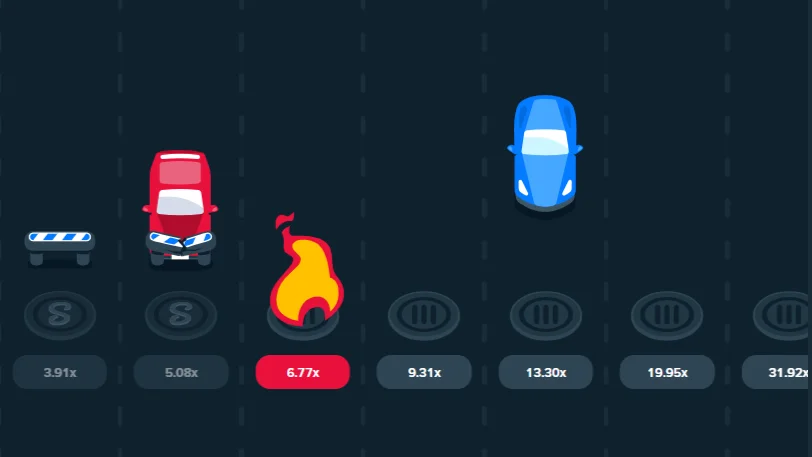
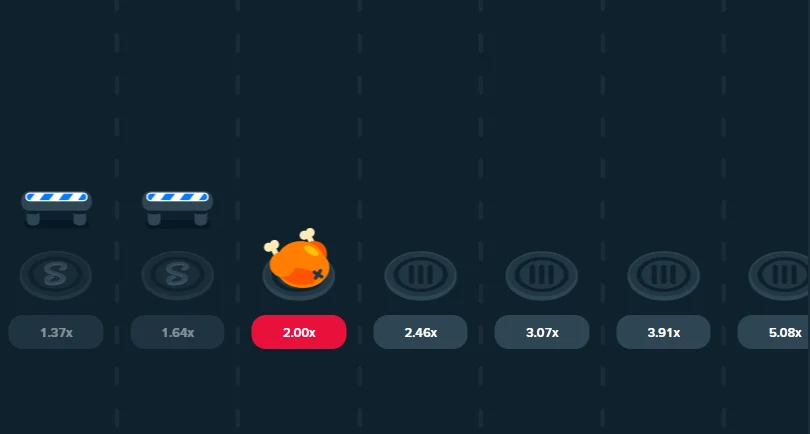
Stake Chicken is a crash-style arcade game where you guide a slightly reckless chicken across a multi-lane road. Each safe step lands on a tile that displays a higher multiplier. You can cash out at any moment to lock in your stake multiplied by the current value — or you can push one more tile and risk losing the entire stake instantly.
What makes it feel different from a classic crash graph is the step-by-step pressure. You’re not watching a line climb; you’re choosing whether the chicken takes another hop into danger. It’s simple, fast, and surprisingly personal — especially when you’re sitting on a nice number and the next tile looks tempting.
For Canadians who prefer clear rules over noisy slot features, Stake Chicken is refreshingly direct. The maths is transparent, the RTP is often quoted around 98% (about a 2% house edge), and volatility is something you can dial up or down via four difficulty modes.
Stake Chicken — Key Facts
- Provider: Stake Originals
- Genre: crash / step ladder
- RTP: ~98.00% (varies by operator/version)
- House edge: ~2.00%
- Difficulty: Easy / Medium / Hard / Expert
- Cash out: any time before the wipe-out
- Mobile: browser-based (no separate app needed)
- Currency note: set budgets in CAD for control
CAD reality check: because rounds are fast, it’s easy to burn through a budget without noticing. Decide your session cap first (for example $20–$50 CAD for casual play), then pick stakes that make sense within that limit.
Why Canadians Get Hooked on the Format
Stake Chicken is minimal in the best way. It cuts the noise, shows you the numbers, and puts the tension exactly where it should be: in the decision to step again or take the win.
Clear Risk, No Guesswork
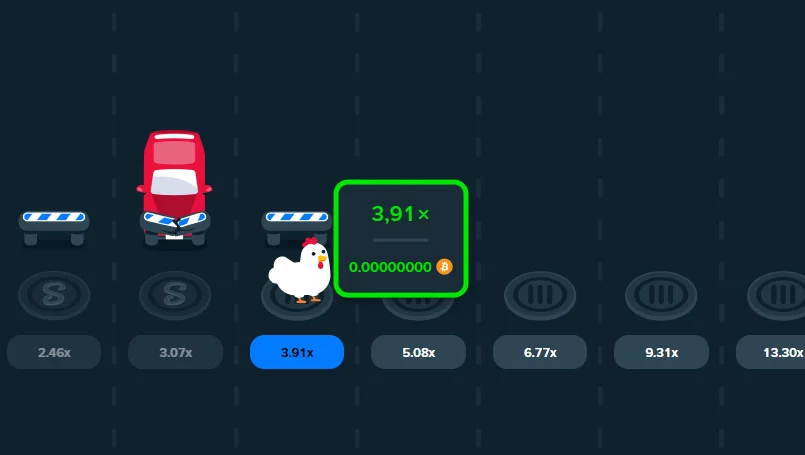
Every safe tile shows a visible multiplier. You always know what you would get if you survive the next step — and that clarity makes it easier to set sensible exit points rather than chasing mystery features.
Fast Rounds, Easy to Dip In
A round resolves in seconds. That makes it great for short sessions — but it also means you should set a time cap (like 10–15 minutes) so your CAD budget doesn’t disappear in a blur of “one more run”.
Volatility You Can Choose
Easy feels steady and forgiving. Expert is ruthless and explosive. Being able to switch modes between rounds gives you control over how wild the next few minutes get — which is rare for instant games.
How Stake Chicken Works
The core loop never changes — which is exactly why the game is so approachable. Your choices create the variety: stake size, difficulty mode, and the point where you’re willing to cash out. Here’s what a typical round looks like.
1) Choose a difficulty.
Easy, Medium, Hard, or Expert. This sets the volatility and how aggressively multipliers ramp.
2) Set your stake (CAD).
Pick an amount that fits your session budget. Small stakes are ideal while learning your cash-out habits.
3) Start the run.
The chicken steps onto the first tile and the starting multiplier becomes active.
4) Decide: step or cash out.
Each safe step increases the multiplier. Cash out anytime to lock in stake × multiplier.
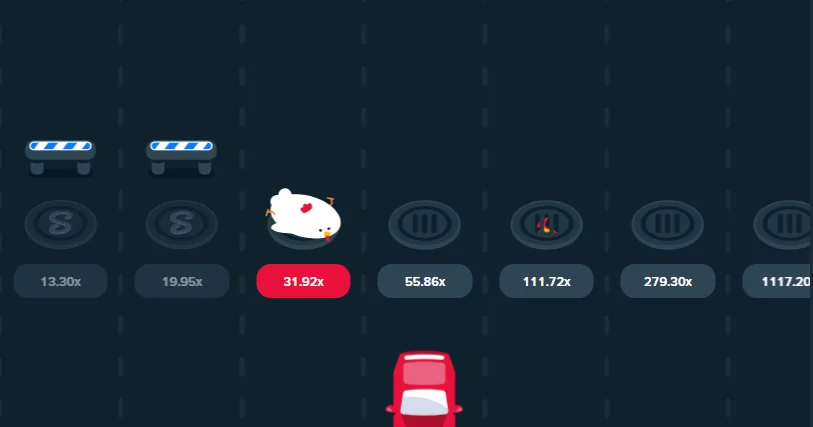
If the chicken gets wiped out (cars, broken tiles, hazards), the round ends immediately and the stake is lost. That “all or nothing” edge is what creates the tension — and why a pre-set plan matters more than luck.
A helpful habit is to treat your cash-out as a range rather than a single magic number. For example, you might aim for x2–x4 on Easy or x3–x6 on Medium. A range makes it easier to cash out on time, because you’re not stubbornly waiting for one exact tile.
First Session (10-Min Plan)
- Pick Easy or Medium.
- Set a small CAD stake (something you can repeat 20–30 times).
- Choose a cash-out range (example: x2–x3).
- Play 15–20 rounds with no setting changes.
- Stop, review, then decide if you want more risk — or you’re done.
If you feel your mouse/thumb speeding up after a near-miss, that’s your cue to take a break. Stake Chicken punishes “tilt taps”.
Mobile Play Notes
Stake Chicken is designed to scale cleanly to smaller screens. The important controls sit in one area, so it feels natural on phones. For the smoothest experience, use a stable connection and keep background apps light during longer autoplay runs.
RTP, House Edge, and Provably Fair Play
| RTP | ~98.00% (typical figure) |
| House edge | ~2.00% |
| Multiplier | Step-based progressive ladder |
| Cash out | Any safe tile |
| Volatility | Difficulty modes |
| Fairness | Provably fair seed verification |
A ~98% RTP is strong for an instant game, but it’s still a long-run average, not a promise. In real sessions you’ll swing above and below that number, especially if you spend time in Hard or Expert where wipe-outs come quickly.
“Provably fair” means outcomes are generated using cryptographic seeds that can be verified. The key takeaway is simple: results are not influenced by your recent wins or losses. A cold streak doesn’t make a hot streak “due”, and a big win doesn’t mean the game is about to punish you. Each round is its own coin flip with pricing built into the RTP.
Best mindset: treat Stake Chicken as paid entertainment. Your goal is a controlled session with clear limits, not “getting even” or turning it into a side hustle.
Difficulty Modes: How Volatility Changes
The difficulty selector is the heart of Stake Chicken. It changes how “comfortable” the road feels and how quickly multipliers become tempting. If you’re managing a CAD bankroll, consider your difficulty choice as part of budgeting — not just “how brave you feel”.
Easy
More breathing room. Multipliers rise steadily and you can build a routine around modest cash-outs. Ideal for learning the rhythm, testing autoplay settings, and keeping sessions longer.
Best for: beginners, cautious budgets, steady play.
Medium
A popular balance point. The danger feels real earlier, but you can still find reliable “exit windows” without everything turning into chaos.
Best for: regular crash fans, mixed sessions, structured risk.
Hard
Shorter, sharper pressure. Multipliers look juicy quickly and wipe-outs feel more frequent. Great for “highlight” attempts — risky as a default setting.
Best for: experienced players, short intense bursts.
Expert
Explosive and unforgiving. You’ll see massive multipliers in fewer steps, but most runs end quickly. Treat it like a “fun money” mode with a strict cap.
Best for: daredevils with stop-loss rules they actually follow.
A healthy pattern is to keep Easy/Medium as your “main” mode, then allocate a separate, smaller CAD amount for Hard/Expert. That way, the high-volatility fun doesn’t quietly eat the budget meant for a longer session.
Autoplay and Practical Strategy Ideas
Autoplay in Stake Chicken is best viewed as a discipline tool. It won’t predict outcomes, but it can follow your rules precisely — even when you wouldn’t. If you tend to chase after near-misses, autoplay can keep your session from turning into impulsive clicking.
Common Autoplay Controls
- Total session budget (set this in CAD if available)
- Difficulty mode used for each round
- Target steps (how many tiles to attempt)
- Number of rounds before stopping automatically
- Stop-win / stop-loss limits for the whole run
- Stake adjustments after wins or losses (optional)
The best way to use autoplay is to configure it while you’re calm, then avoid tweaking it mid-session. If you keep intervening, you lose the main benefit: consistency.
Simple Strategies (That Don’t Pretend to Beat Maths)
- Early Cash-Out Routine: Easy/Medium, aim for low multipliers (x1.5–x3) to keep swings manageable.
- Mid-Range Window: Medium/Hard, target a realistic band (like x3–x8) and cash out as soon as you hit it.
- Expert “Shots” Budget: choose a fixed CAD amount (example: $10) for a few Expert runs, then stop completely when it’s gone.
- Time-Boxed Sessions: set a timer for 10–20 minutes so speed doesn’t turn into overplay.
The “strategy” in Stake Chicken is mostly behavioural: you’re managing impulses, not unlocking secret patterns.
Most wipe-outs don’t come from bad luck — they come from ignoring a perfectly good cash-out because the next tile looked “too close to quit”.
Crash game rule of thumb
Common Mistakes (and How to Avoid Them)
Mistake: Chasing a Near-Miss
Missing a big multiplier by one tile can sting, especially on Hard or Expert. The trap is instantly increasing your CAD stake “to make it back”. If you feel that urge, pause for two minutes — then restart on a lower mode with the original stake.
Mistake: No Session Limits
Stake Chicken’s pace is its biggest risk. Decide a CAD stop-loss and a stop-win (even a modest one) before you start. Without that, the game can quietly turn a “quick break” into an expensive one.
Mistake: Switching Modes Constantly
Changing difficulty every few rounds makes it hard to read your own behaviour. Try a clean batch (10–20 rounds) in one mode, then decide whether you want more or less volatility based on how it actually felt.
Pros and Cons
Stake Chicken is sharp, honest, and highly replayable — but it’s still a volatile instant game. Here’s the clean trade-off.
What Works Well ✅
- ✔ Simple rules you can explain in one sentence.
- ✔ High RTP for an instant game (commonly ~98%).
- ✔ Cash-out control that makes decisions feel meaningful.
- ✔ Difficulty slider that genuinely changes volatility.
- ✔ Mobile-friendly layout with no separate download needed.
What to Watch For ❌
- ✘ Speed leads to overplay if you don’t set a timer/budget.
- ✘ Expert mode is brutal and can drain CAD quickly.
- ✘ Minimal “feature” content (slot fans may find it too bare).
- ✘ No strategy removes house edge — discipline matters more than systems.
Responsible Play Notes for Canada
Canada’s online gambling landscape can vary by province and operator, but one principle is universal: only play with money you can afford to lose. Stake Chicken’s fast pace makes it especially important to treat limits as rules, not suggestions.
- Set a CAD session budget before you start and don’t reload it mid-session.
- Use time limits (10–30 minutes) so “quick play” stays quick.
- Separate high-volatility money if you want Hard/Expert runs.
- Never chase losses after a near-miss or a streak of wipes.
- Take breaks when you notice emotional clicking or frustration.
If gambling stops being fun or feels hard to control, consider reaching out to local provincial support resources. This page is informational and not a substitute for professional help.
Stake Chicken FAQ
Do I need to download an app to play on mobile?
No. Stake Chicken is designed to run in modern browsers, so the experience is consistent across phone, tablet, and desktop without requiring a separate download.
Is Stake Chicken provably fair?
Yes. The game uses a provably fair system where results can be verified via seeds/hashes. The casino edge comes from the RTP, not from manipulating individual outcomes.
What’s a sensible bankroll approach in CAD?
Start with a session cap you’re comfortable losing (for example $20–$50 CAD for casual play) and choose stakes that allow many rounds within that budget. Smaller stakes help you learn your cash-out habits without big swings.
Can any strategy guarantee profit?
No. Stake Chicken has a house edge. Strategies are useful for managing volatility and avoiding emotional decisions, but they cannot remove the edge or guarantee long-term profit.
Which mode is best for beginners?
Easy or Medium. They give you time to understand how quickly multipliers ramp and how your own discipline behaves. Hard and Expert are best treated as optional “high-volatility” modes once you have a plan.
Final Verdict — Should Canadians Try Stake Chicken?
If you enjoy crash-style games and want something that feels more hands-on than a simple multiplier line, Stake Chicken is an easy recommendation. The rules are crystal clear, the pacing is snappy, and the difficulty modes let you choose your preferred level of chaos.
The key is how you approach it: set a CAD budget, pick a realistic cash-out range, and don’t treat Hard/Expert as default settings unless you’re happy with heavy swings. Play it as structured entertainment and it’s one of the most satisfying instant games you can add to your rotation.
Stake Chicken Canada is an informational website created for educational and entertainment purposes only. We do not operate any games or accept real money payments. All content, including demos and external links, is provided for informational use. Gambling is restricted to adults aged 18+ (or legal age in your jurisdiction). Players are encouraged to play responsibly and review the terms, conditions, and local regulations of any third-party platforms before participating.
Address: 225 King Street West, Toronto, ON M5V 3M2, Canada